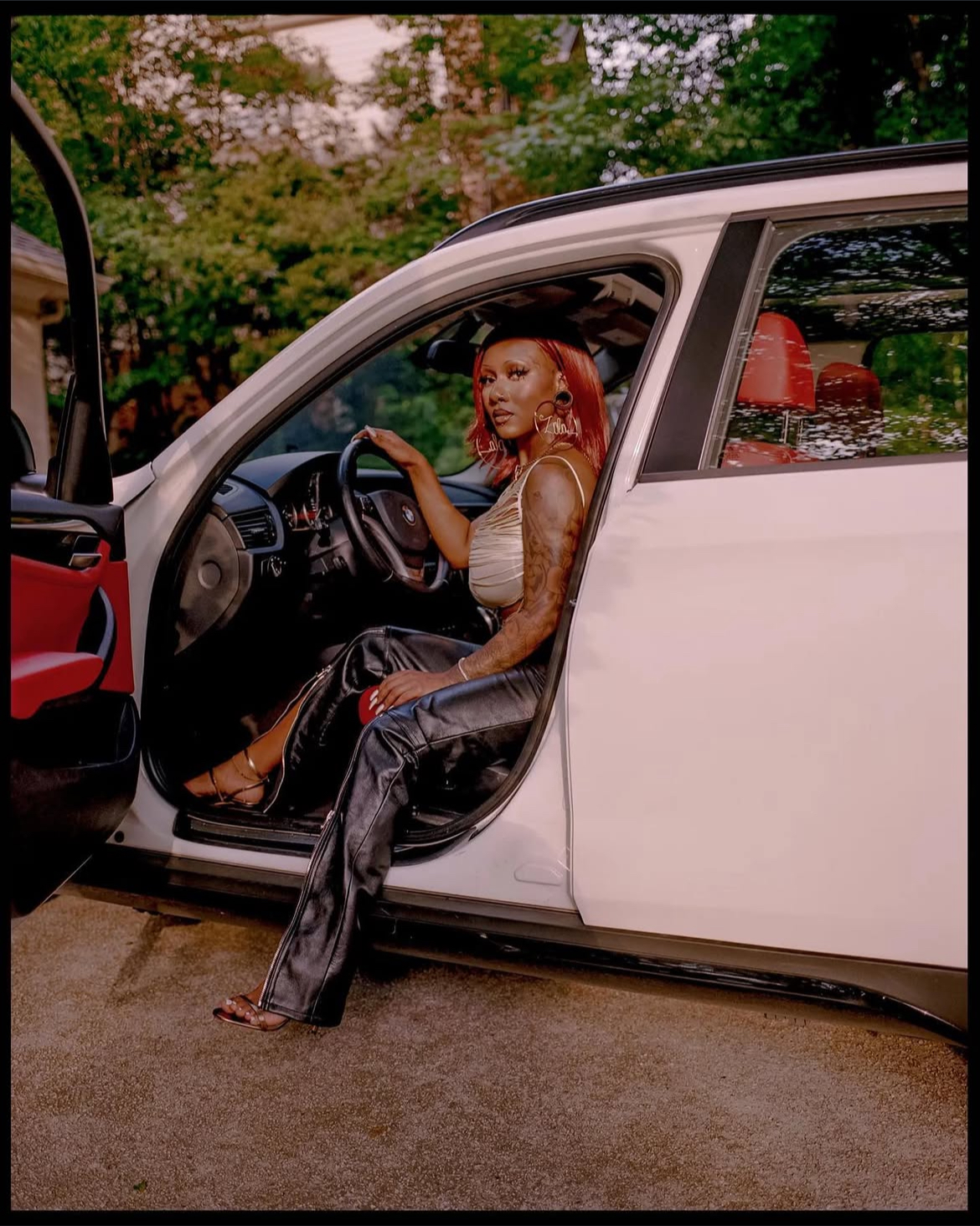
In a conversation with Mikyla Jackson-Jordan for the Provocation side of La Renardé Magazine’s debut issue,, ZOLA reflects on the early experiences that shaped her voice, from writing a children’s book to discovering the power of blogging and digital storytelling. She discusses the important of transparency, the courage it takes to remain authentic, and the responsibility of creating work that feels honest.
September 15, 2026
For Aziah “ZOLA” King, storytelling has never been separate from survival. It is a way of documenting the self, challenging the room, and making space for voices that refuse to be reduced. Her works lives at the intersection of folklore, digital culture, humor, vulnerability and unapologetic self-expression, where a personal story can become a cultural moment.
What emerges is a portrait of an artist who understands that storytelling is not simply about being heard. It is about claiming authorship, preserving perspective, and reminding the world that Black women have always been writers of their own narratives.
MIKYLA: “Where do you draw your inspiration from?”
ZOLA: “In middle school, I had a creative writing teacher who secretly submitted my children’s book to a contest because I was too shy to do it myself. She believed in me before I believed in myself. The book was titled “Caught Red-Handed”. It was a moral tale about a little girl who stole a toy through a window… not realizing it was a freshly painted prop. Bright red paint smeared all over her hands, everybody knew she tried to steal instantly! I did all my own illustrations; a few lopsided heads and a couple stick fingers, but with love and intention.. to my shock, I ended up winning 3rd place. But more than that, her belief in me really stuck. Her nudge outside my comfort zone planted something permanent. I kept writing. I started a blog on Tumblr and people actually read it and requested more articles.
I slowly began shaping my own voice. Weird, heartfelt, a little loud, funny, way too honest sometimes — but mine”
MIKYLA: “Your transparency is amazing, how did you get to that level of comfortability in a world that does not want to hear our stories?”
ZOLA: “I learned early on that having a voice is kind of a big deal. Like, “ your truth might LITERALLY change someone’s life” kind of big! Somewhere between childhood and my awkward emo phase, I realized people are drawn to what’s real. The quirks, flaws, feelings, all of it is necessary!
Honesty is oddly magnetic.
I mostly credit my upbringing. My mom had a PhD in Truth telling (not literally, but she totally could’ve). She made it very clear that your voice matters, and to use it with care and courage.
Eventually, being transparent became second nature…not because it was easy, but because it felt necessary. There’s something healing about showing up as your full self. It’s connective. It’s creative. It’s kind of the whole point.”
So why embellish? Why shrink? That defeats the purpose if you ask me.”
MIKYLA: “I’d have to agree with that, and your honest impact has solidified your legacy. Was that something that you wanted to happen?“
ZOLA: “I never could’ve predicted how many people would resonate with my expression, let alone CELEBRATE it. Honestly, I was just trying to survive my own healing. Art, writing, even the way I did my makeup or threw together an outfit — it was all therapy before it was ever “aesthetic.”
And then came the “brand” talk. The “muse” conversations. (Imagine me blinking slowly at first, then finally leaning in. Because that’s how that happened)
I went from “writer” to “artist” without asking for permission!
Mostly because I had absolutely no interest in performing for the male gaze or molding myself into some mass-market version of black womanhood or artistry. That’s when things really started to shift.
Somehow, the way I did my makeup became a trending topic. I watched girls shaving their eyebrows, overdrawing their lips, coloring outside the lines, and then tagging and thanking me for the inspiration.
I got calls from directors and photographers telling me my face is in the dressing room being used for the costume designers inspiration.. I loved that. (Calling the real deal is okay too in case anyone was confused)
I literally watched beauty standards bend in real time. And the more I trusted my instincts, the louder the impact became. Apparently being bold is contagious!”
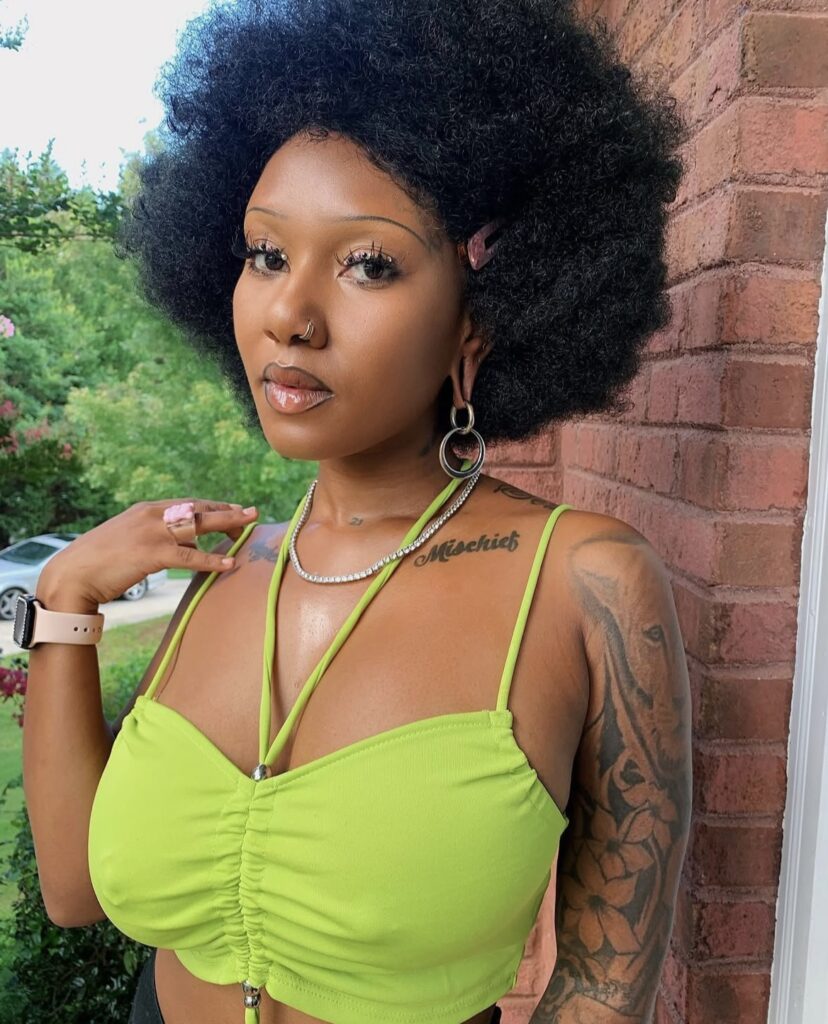
MIKYLA: “Being seen and heard is something that is hard to come by as a black woman, yet you’ve managed to direct your story. Is there anything you would do differently?”
ZOLA: “Well, no.
That was Janicza Bravo’s seasoned direction, and I am forever grateful for her.Working with other Black creatives wasn’t just a dream, it was a nonnegotiable! The only way our stories remain OURS is if we’re the ones telling them.
I watched and understood deeply how the world lit up around my people — mesmerized by our depth, our language, our fire, our overall experience..I knew THAT had to be protected if I wanted my community to truly see me, receive me, and respect me in these spaces.
Janicza shared that vision. She committed to it without hesitation. Her dedication gave me the strength to plant my feet and not flinch when questioned.
To not let anyone water down what I came here to do/share.
Too often, our stories are sold off, reshaped, rebranded, retold, chopped and screwed up, softened, stretched thin for easier consumption…
Stripped of truth until they no longer belong to us.
That essence…OURS, doesn’t survive translation when too many non-black hands touch the narrative. The story becomes something else.
Something distorted.
Something off.
Unrelatable.
A fantasy. A lie.
A version of us built for their comfort, not our reflection.
And I refuse to be a victim of that!
If I could do anything differently, I wouldn’t let a single soul near my work who doesn’t share that sacred mission. Wouldn’t let them sit in the room. Wouldn’t let them listen.
Because if you can’t SEE us you don’t deserve access to our creative spaces.“
MIKYLA: “And I have found that Black artistry is something that cannot be imitated. How do you feel about those who’ve benefited from your impact, and the way you changed social media?“
ZOLA: “I’m genuinely proud, and no, not in the fake humble way, but in a “go check the timestamps” kind of way!
My creativity has inspired others so deeply that simply aligning with me artistically feels like elevation. That is a gift. A responsibility; one that I don’t take lightly.
I’ve always believed storytelling should be accessible, and seeing it happen in real time? *chef’s kiss*
Let’s also talk facts because the second I suggested a more narrative based approach to Twitter? It was implemented.The exact moment. Not “coincidentally” but immediately. Suddenly the timeline had structure, rhythm, and plot. It wasn’t baseless one worded tweets people wanted to go viral anymore— the writers popped OUT!
That shift cracked the door wide open for independent storytellers. I was that shift.
Would a check have been nice? Obviously. But the culture knows who opened that door. The influence is embedded in the algorithm.
Just standing in my creative truth makes space for others to do the same and that’s something I’m proud to be a part of. “
MIKYLA: “Well, La Renardé is a hub and supporter of Black artists and storytelling. We consider ourselves to be the narrators allowing women and creators like yourself to write it all in your own way. So, what is your story today?”
ZOLA: “My story as it stands today, remains beautifully unfinished.
Not because I’m withholding, but because I’m still gathering, still listening, still living through the middle of the paragraph.
What I DO know is I’m committed to bringing back the true Black sitcom.
The kind that feels like your auntie’s laugh, your cousin’s side eye, your sister’s sleep over, and a perfectly timed plate of mom’s spaghetti being slid to you during your biweekly heart to heart with her.
That specific warmth. That humor. That US!
We deserve stories that reflect the full spectrum of our joy, pain, generational nuance, and occasional passive aggressive hugs.
I think the world would benefit from remembering just how different and how deeply connected we all really are.
I’ll tell that story through film, literature, and music. Just like we’ve always done. It’s like our ancestral group chat! Layered, sacred, occasionally chaotic…
I didn’t come here to play small. I came here to live full and leave honest and timeless. I said what needed saying, even when my voice cracked. I stayed soft, but I didn’t bend for anyone’s comfort. I kept my soul intact. I loved loud, wrote my way through the heartache, and turned every scar into something beautiful. I didn’t wait for a seat or special invite; I brought my own chair, table, then lit a candle for those coming behind me. If anything I touched lit a spark in you, let that fire burn confidently.
As for my personal healing?
That lives in my writing. Always has.
It’s where the mess finds language!
My hope is that someone, somewhere, will stumble across a sentence of mine and have that “Oh. THATS what I’ve been trying to say!” moment. I live for THAT.
Healing myself while helping others do the same? That’s the artist’s dream and that’s where you’ll find me — somewhere between a rough draft, a revelation, & a double shot of whiskey!“
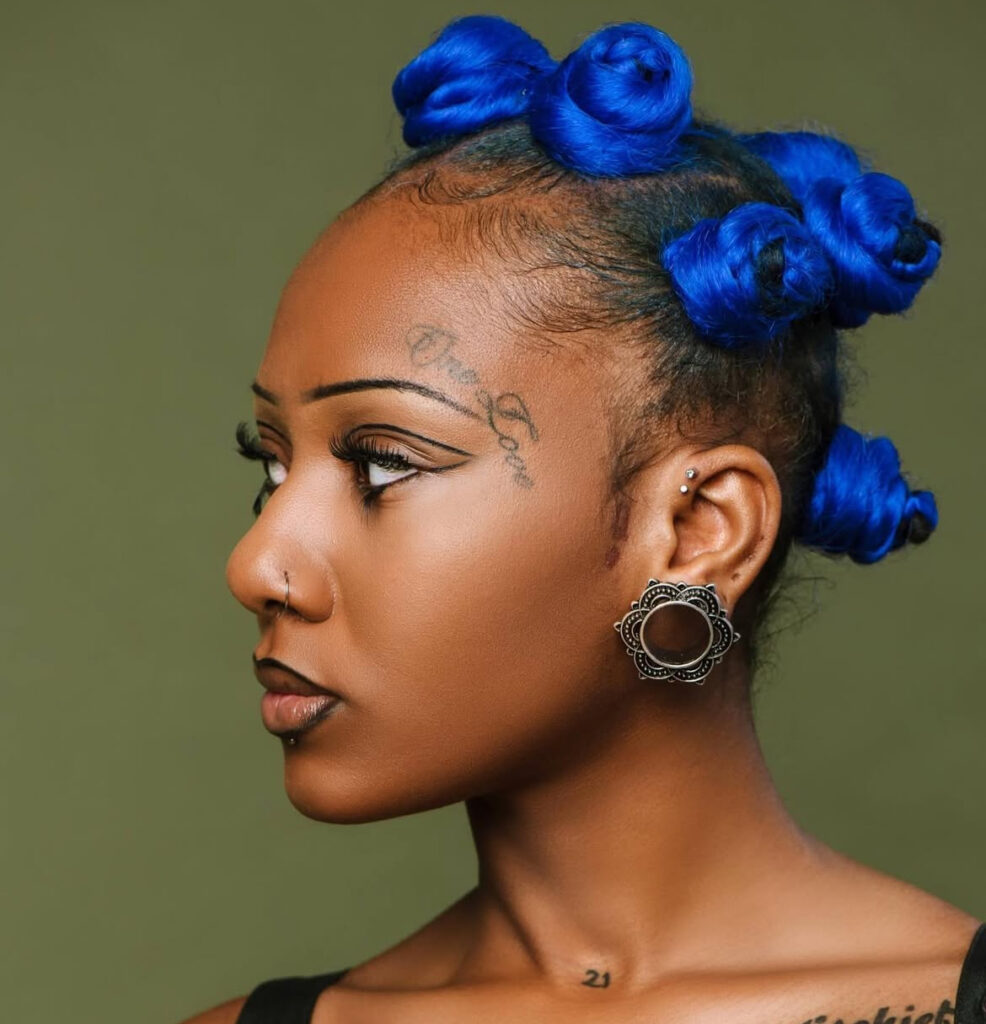
Aziah “ZOLA” KING